Modern vehicles are no longer purely mechanical machines. They’re complex systems with electronics, control modules, sensors and software. Mechanics need diagnostic automotive tools to accurately identify which part of a vehicle is not working properly. The right tools help reduce guesswork and avoid unnecessary repairs, which ultimately saves time and money.
Why Are Diagnostic Tools Important in Auto Repair?
Car diagnostic tools are devices that connect to a vehicle’s onboard computer systems to help mechanics communicate with the vehicle’s control units, read fault codes and view real-time data. These data help mechanics pinpoint the problem, rather than relying solely on signs.
Many modern faults don’t present obvious mechanical signs. If not tested correctly, problems such as a blown fuse, faulty relay, weak signal or incorrect brake output can be misdiagnosed as much larger issues. Diagnostic tools help mechanics:
- Identify the root cause of a problem faster
- Prevent unnecessary parts replacement
- Reduce comebacks and misdiagnoses
- Work more safely when testing live electrical systems
As vehicles continue to integrate technology, such as advanced driver assistance systems, diagnostic tools are no longer optional for professional mechanics. The increased complexity of cars is one of the factors driving sales growth in the automotive diagnostics scan tool market, which was valued at $41.04 billion in 2024 and is projected to reach approximately $82.25 billion by 2034.
What Are the Top-Rated Diagnostic Tools for Mechanics?
Good diagnostic tools are those that perform well in real workshop conditions. Mechanics favor tools that are reliable, easy to use and capable of working across a wide range of vehicles without unnecessary complexity.
Many workshops rely on a mix of diagnostic tools from established manufacturers that focus on usability rather than excessive features. IPA Tools is among the top-rated because its tools are easy to use and reliable. They’re suitable for both experienced technicians and those still learning with different devices.
The original equipment manufacturer (OEM) has specialized in professional tools and equipment for multiple industries since 1996. It has earned the reputation of offering unique tools designed with specific diagnostic tasks in mind. These tools are widely used to support the safe and efficient repair of various types of vehicles, particularly in trailer and truck maintenance, where accuracy and safety are crucial.
4 Best Diagnostic Tools Every Mechanic Should Have
These four diagnostic tools are often touted as the best for mechanics in professional workshops, dealerships and specialized repair bays, as well as for hobbyists in their home garages.
1. Brake Testing Tool
Brake testing tools can help mechanics measure braking force and efficiency, and they are essential when working on vehicles where visual inspection alone cannot accurately judge braking performance. There are different types of brake testing tools available, such as plate testers, roller testers and decolometers.
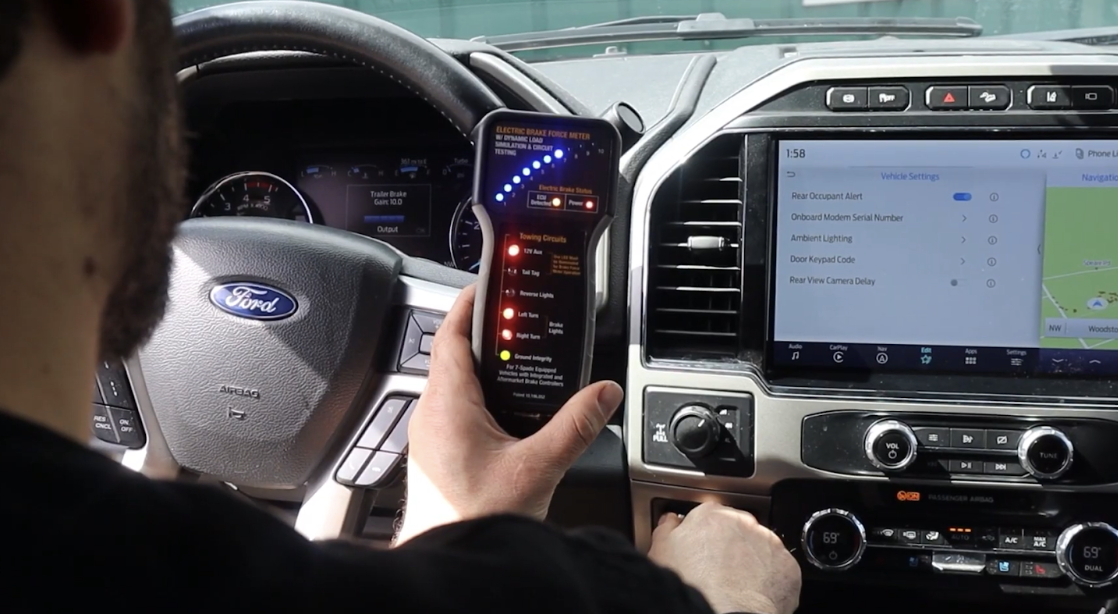
You can also find specialized brake testing tools in the market, such as the Electric Brake Force Meter (3rd Gen) by IPA Tools. This all-in-one diagnostic tool can test brake systems and tow circuits of a truck even when there’s no trailer. It stimulates trailer brake and light load to help identify wiring faults, weak connections or incorrect brake controller operation that may not trigger dashboard warnings.
Since the Electric Brake Force Meter (3rd Gen) works with both integrated and aftermarket brakes, you can use it to test a wide range of trucks and SUVs, and ensure the brake controller output is functioning correctly before the vehicle returns to the road.
2. OBD-II Scan Tool
Most vehicles manufactured from 1996 onward come with an On-Board Diagnostics (OBD-II) system, which monitors engine and emission performance to detect problems early. Therefore, an OBD-II scan tool is one of the most widely used diagnostic devices in auto repair.
It helps you read and interpret trouble codes by connecting directly to a vehicle’s onboard computer. With this tool, you can identify which vehicle component is causing the issue more efficiently and accurately.
Although you need to learn some engine code reader basics to use it optimally, there are various OBD-II Scan Tools out there that are easy to use. Manufacturers, such as Innova, offer scanners that focus on transparent fault-code reporting and live data access without overwhelming the user, whether it’s DIYers or professionals.
The Innova 5610 provides comprehensive diagnostics across all vehicle systems, including engine, transmission, ABS and SRS. Equipped with app integration, the device can even offer fixes specific to the vehicle’s make, model and issue. It features bidirectional testing functionality, which enables you to send commands to your car’s components, such as its fuel injectors.
3. Electrical Short-Circuit Diagnostic Tool
Among the best tools mechanics use in auto repairs is one that helps diagnose electrical short circuits. These are essential for safely tracing wiring faults, allowing you to test circuits under controlled conditions and identify the source of excessive current draw.
The Fuse Saver by IPA Tools has impressive capabilities to help mechanics troubleshoot short circuits without blowing fuses or relying on smoke testing. The kit includes multiple resetting thermal circuit breakers that cover standard fuse ratings, as well as adapters that provide access to a wide range of fuse types commonly found in modern vehicles.
When a short circuit is present, the breaker trips to protect the circuit. You can then manually reset the breaker to restore power and continue testing. This enables the stress-testing of a circuit repeatedly while tracing the fault.
4. Oscilloscope
If you work with complex electrical systems, an oscilloscope is a helpful tool to have. It plots electrical signals as waveforms over time, so you can see how sensors, actuators, ignition and charging systems behave in real time. This tool may help in identifying intermittent faults or timing-related issues that may not trigger fault codes.
An oscilloscope is an advanced testing tool, but for beginners, the PicoScope 2000 Series from Pico Technology is a great option. While user-friendly and affordable, it provides advanced features, including a 100 MHz bandwidth, a maximum memory of 128 MB and sampling rates of up to 1 GS.
Compact and simple, you can connect it to a PC to view signals clearly, generate test waveforms and perform basic debugging. Although it’s not marketed specifically for automotive use, it’s a practical tool if you want to learn and perform advanced electrical diagnostics.
Good Diagnostics Form the Foundation of Good Repair Work
Due to advanced vehicle systems and technology, auto repairs are more complex than ever. Mechanics need to adapt and invest in the proper diagnostic equipment to work more efficiently, reduce errors, and deliver safer, more reliable repairs.