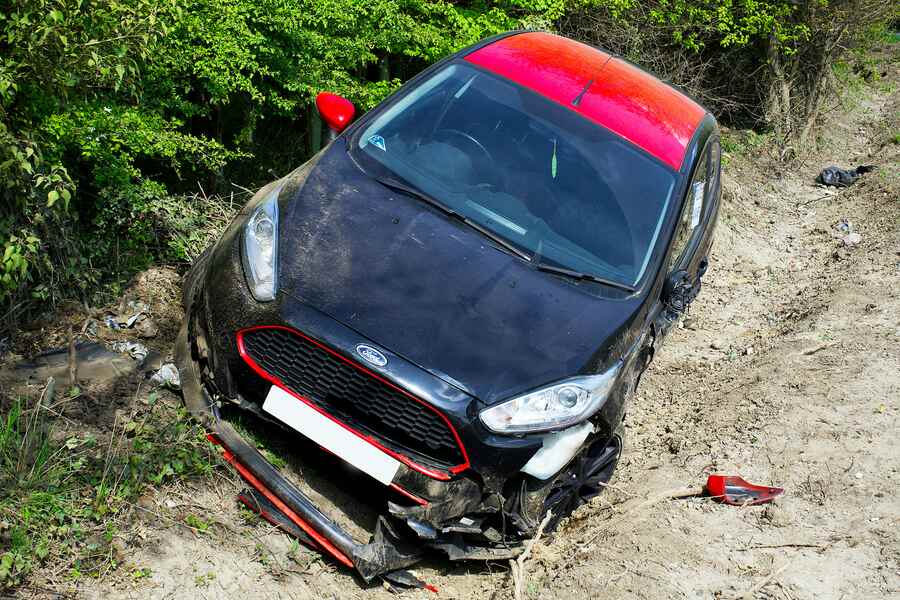
Picture this: you have a bump in a car park, swap details with the other driver, and call your insurer. A few days later you get a letter telling you your car is a write-off. It does not look like a write-off to you – there is a dent in the door and some scraped paint – but apparently the numbers do not add up for your insurance company, and so your car is gone.
This is happening to British drivers at a staggering rate. According to data obtained from the DVLA under a Freedom of Information request, 562,185 vehicles were written off by insurers in 2024 alone – roughly one every minute of every day, around the clock. Over the past six years, more than three million cars have been written off across the UK. That is a 46% rise compared to figures from 2017, and it shows no signs of slowing down.
If you have never had a car written off, the odds are increasing that you eventually will. And when it happens, there is a good chance your insurer will offer you less than your car was actually worth – and send a vehicle that could have been repaired to the scrapyard instead.
Here is what you need to know.
What does “written off” actually mean?
When your insurer declares your car a write-off, they are essentially saying it would cost more to fix than the car is worth. But that calculation is not as straightforward as it sounds, and the outcome varies enormously depending on which category your car falls into.
Category A and B write-offs are the serious ones – cars with severe structural damage that are beyond saving. A Category A car must be crushed entirely. A Category B car can have some parts salvaged, but the body shell has to be destroyed. If your car ends up in either of these categories, the damage really is that bad.
Category S and Category N are where most everyday write-offs land, and where the system starts to look much more questionable. A Category S car has structural damage but can, in principle, be repaired properly and put back on the road. A Category N car has no structural damage at all – only cosmetic or mechanical issues. The frame is fine. The car could, by definition, be fixed.
Insurers write off Category N cars anyway. A lot of them.
Your car might have been fixable
New research from Revive! Auto Innovations, a repair company specialising in minor bodywork damage, analysed the UK salvage marketplace and found something striking: of the 262,339 Category N vehicles written off in 2025, around 91,500 of them – more than one in three – could have been fixed using relatively simple repair techniques. Techniques that can be done on your driveway, in a few hours, without needing a courtesy car.
These are not complex panel-beating jobs. Revive! specialises in what the industry calls SMART repairs – the kind that deal with scuffs, scratches, shallow dents, and chipped paint. The sort of damage that, if you saw it on a used car forecourt, you might not even clock as serious. Yet insurance assessors are routinely deciding that cars with exactly this kind of damage are not worth fixing.
Why? According to Revive!’s Managing Director Mark Llewellyn, assessors often overestimate what a repair will cost, make pessimistic assumptions about parts availability, and treat minor damage as more significant than it actually is. The result is that your car ends up written off, you end up with a settlement cheque and a hunt for a replacement, and a perfectly repairable vehicle ends up in the salvage system.
The cheque you receive might not be enough
Here is the other problem: even when a write-off is genuinely justified, there is a good chance the settlement offer you receive does not reflect what your car was actually worth.
The Financial Conduct Authority flagged this back in December 2022, warning insurers that their valuations for written-off vehicles were often too low and telling them to sort it out. The regulator’s concern was that drivers were being systematically underpaid – receiving less than the true market value of their car at the time of the incident.
Despite that warning, the problem has not gone away. Allegiant Finance Services, the claims management company whose Freedom of Information request produced the write-off figures cited above, monitors Financial Ombudsman rulings and tracks the gap between what insurers offer and what drivers are actually owed. Their conclusion is blunt: too many motorists are still being short-changed.
Stephen Griffiths, Head of Product at Allegiant, says: “Whilst some insurers are now doing the right thing, we are seeing concerning signs that insurers haven’t fully taken on board the FCA’s warning about undervaluation. That simply isn’t acceptable. Motorists are being ripped off too often.”
If your car has been written off and you accepted a settlement without questioning it, it may be worth revisiting. You are entitled to ask your insurer to explain exactly how they calculated the offer. You can cross-reference their figure against used car pricing guides. If you think you have been underpaid and cannot resolve it directly, you can take the case to the Financial Ombudsman Service for free. Claims management companies can also do this work for you on a no-win, no-fee basis.
The key point is simple: do not assume the first number your insurer gives you is the right one.
Why is this making your premiums more expensive?
All of this feeds into a cost spiral that ends up hitting you in the wallet, even if your own car has never been near another bumper.
The Association of British Insurers reported that motor insurers paid out a record £11.7 billion in claims in 2024 – a 17% jump on the previous year. Vehicle repairs alone accounted for £7.7 billion of that. The average claim paid out across 2024 was £4,900, rising to £5,300 in the final quarter of the year. These are record figures, and they flow directly into the premiums you pay: the average cost of car insurance in 2024 was £622, up 15% on 2023.
Some of that cost is unavoidable – parts are more expensive, skilled bodywork technicians are harder to find, and modern cars have more sensors and components that get damaged in collisions. But some of it is self-inflicted. When insurers routinely write off repairable cars rather than investing in cheaper fix options, they drive up their own claims costs – and pass those costs on to every driver at renewal time.
What happens to your written-off car?
If you do not buy your car back from the insurer – which you are allowed to do in most cases – it will typically be sold at a salvage auction. From there it usually ends up with a rebuilder, a trader, or a dealer who will repair it and sell it on. You will not see any of that money.
There are currently more than 13,500 categorised vehicles listed for sale on Autotrader alone, ranging from everyday hatchbacks to high-end sports cars. Each one represents a previous owner who received a write-off settlement and moved on – often without knowing that the car they lost was bought cheaply at auction and sold on for a profit by someone else.
Marketplaces like Second Gears have been built specifically to close that gap. Founded in 2025, Second Gears connects people selling crash-damaged, written-off, or imperfect cars directly with a network of over 1,200 verified buyers – rebuilders, traders, and dealers who are actively looking for these vehicles. The idea is to cut out the auction middleman and let sellers keep the margin that would otherwise go elsewhere.
Adam Mir, Founder of Second Gears, says the sheer scale of write-offs has created a market that most ordinary drivers do not even know exists: “Most people who have a car written off think their only options are to take what the insurer offers or hand the car over and walk away. But there is a whole community of buyers who specifically want these cars and will pay a fair price for them. We built Second Gears to make that connection easy, so the person who owned the car gets a better outcome – not just the trader who buys it at auction for a fraction of what it’s worth.”
What you should do if your car gets written off
If you get a write-off letter from your insurer, here are the practical steps worth taking before you sign anything.
First, find out which category your car has been placed in. If it is Category N, ask your insurer specifically why repair was not considered. Given that more than a third of Category N cars could be fixed with basic repair techniques, it is a fair question.
Second, do not accept the settlement figure without checking it. Get your insurer to show you exactly how they valued your car – which comparable vehicles they used, and from which sources. Then check those figures yourself using HPI, Glass’s Guide, or similar tools. If the numbers do not match, say so.
Third, if you want to keep the car, you can often buy it back from the insurer for the salvage value and arrange your own repairs. This can work out significantly cheaper than sourcing a replacement, particularly if the damage is cosmetic.
Fourth, if you decide to sell it rather than repair it, explore your options before heading straight to an auction. Direct-to-buyer platforms can put you in touch with people who will pay more than auction prices because they are cutting out the middleman themselves.
The system as it currently stands is not set up in your favour. But knowing how it works puts you in a much better position to push back – and to make sure that if your car is written off, you at least get a fair deal out of it.